

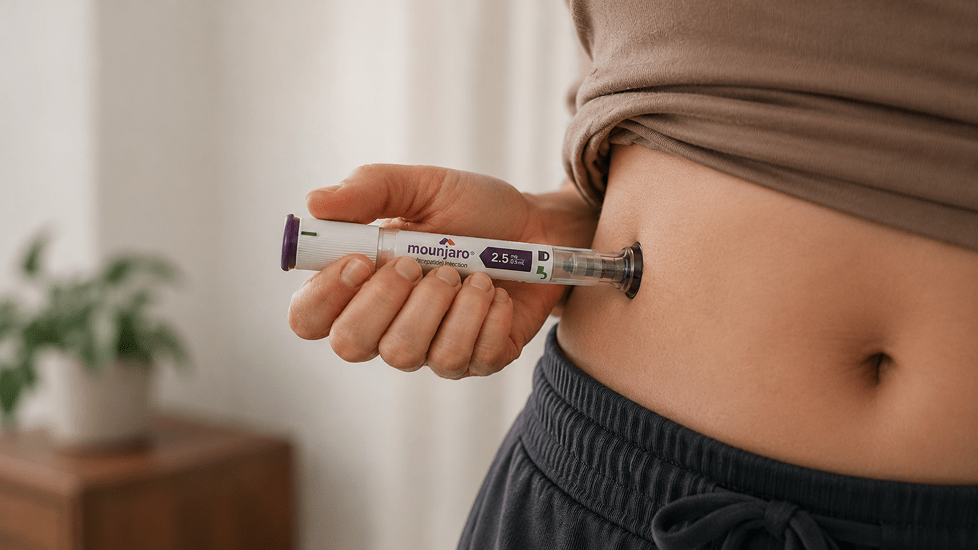
Beyond the clinical trial numbers - what real weight loss with Mounjaro looks like
The clinical trial numbers for Mounjaro are striking. Average weight loss of up to 22.5% of body weight over 72 weeks. More than a third of patients on the highest dose losing 25% or more. Results that, in many cases, rival what was previously only achievable through bariatric surgery.
But numbers on a page tell only part of the story.
What does it actually feel like to lose that much weight? What changes beyond the scale -in energy levels, physical capability, mental health, and daily life? And what should you realistically expect in the weeks and months before those headline figures start to materialise?
This article goes beyond the statistics to give you a complete, honest picture of what Mounjaro treatment involves -and what patients experience along the way.
What Is Mounjaro and Why Is It Different?
Mounjaro (tirzepatide) is a once-weekly injectable weight loss medication that was originally developed for the treatment of type 2 diabetes. It received MHRA approval for weight management in the UK in November 2023, and has since become the most clinically effective weight loss medication currently available in this country.
What makes Mounjaro different from other GLP-1 treatments -including Wegovy (semaglutide) -is its dual mechanism of action. While most weight loss injections work on a single hormonal pathway, Mounjaro targets two simultaneously. This distinction is central to why its results consistently exceed those of other injectable treatments in head-to-head comparisons.
The Dual-Hormone Mechanism: Why Two Receptors Are Better Than One
To understand why Mounjaro works as effectively as it does, it helps to understand the hormonal system it targets.
GLP-1 (glucagon-like peptide-1) is a hormone released by the gut after eating. It stimulates insulin production, slows the rate at which the stomach empties, and sends satiety signals to the brain -telling you that you're full and reducing the drive to keep eating. GLP-1 receptor agonists like Wegovy and Saxenda mimic this hormone.
GIP (glucose-dependent insulinotropic polypeptide) is a second gut hormone that also plays a role in insulin secretion, but additionally influences how the body stores and processes fat. It acts on the brain's reward centres and may enhance the appetite-suppressing effects of GLP-1 when both receptors are activated together.
Tirzepatide -Mounjaro's active ingredient -is the first approved medication to act as a dual GIP/GLP-1 receptor agonist. By activating both pathways simultaneously, it produces a more pronounced and complementary effect on appetite, metabolism, blood sugar regulation, and fat storage than either pathway alone can achieve.
This is not simply additive. The combination appears to produce synergistic effects, which is reflected in the consistently superior weight loss outcomes tirzepatide achieves compared to semaglutide in clinical trials.
In addition to weight loss, Mounjaro has demonstrated meaningful improvements in cardiovascular risk markers, blood pressure, cholesterol, liver fat, and markers of inflammation -making it a particularly valuable option for patients with obesity-related comorbidities.
What Factors Shape Your Individual Results?
Clinical trial averages are a useful benchmark -but they are averages across thousands of participants, each with different starting points, health histories, and adherence patterns. Understanding what influences individual outcomes helps you set realistic expectations and gives you more control over your own results.
Starting weight and BMI Patients with a higher starting BMI tend to lose greater absolute amounts of weight in kilogram terms, though percentage losses are more consistent across groups. The first few months typically show the fastest progress.
Metabolic health and comorbidities Pre-existing conditions including type 2 diabetes, insulin resistance, PCOS, and hypothyroidism can affect the rate of weight loss. This does not mean these patients do not respond to Mounjaro -they do -but the timeline may differ, and clinical monitoring is particularly important.
Diet quality Mounjaro reduces appetite significantly, but it does not determine what you eat when you do eat. Patients who use the reduced appetite window to prioritise protein-rich, nutrient-dense foods consistently achieve better body composition outcomes -preserving more muscle mass and losing a higher proportion of fat -than those whose reduced calorie intake comes primarily from processed or nutrient-poor foods.
Physical activity Regular movement, particularly resistance-based exercise, helps preserve lean muscle mass during weight loss. This matters because muscle is metabolically active -patients who maintain or build muscle during treatment have a higher resting metabolic rate and find it easier to sustain results long term.
Adherence and consistency As with all GLP-1 treatments, consistency is the single most powerful predictor of outcome. Following the titration schedule, maintaining the weekly injection routine, and staying engaged with clinical support all significantly improve results.
Individual biological variation Some people are simply more responsive to tirzepatide than others, for reasons that are not fully understood. If you are at the lower end of the response range, slower progress does not mean the medication is failing -it may mean a dosage adjustment or additional clinical support is needed.
How Titration and Personalised Dosing Works
All GLP-1 treatments begin at a low dose and increase gradually over several months. This process -called titration -allows the body to adapt to the medication, significantly reducing the risk and severity of side effects.
Mounjaro titration schedule:

Not everyone will reach or need the highest dose. Some patients achieve excellent results at 10mg or 12.5mg and maintain that dose long term. The goal of titration is to find the lowest effective dose for each individual -the point at which appetite suppression, side effect tolerance, and weight loss rate are all in balance.
At Rightangled, your clinical team reviews your progress at each stage of titration, adjusts your plan based on how you're responding, and is available between check-ins if you have questions or concerns.
What a Realistic Weight Loss Timeline Looks Like
One of the most common sources of frustration for patients in the early weeks of Mounjaro treatment is the gap between what they expected and what they see on the scale. Understanding the typical trajectory in advance makes that gap far easier to navigate.
Weeks 1–4 (2.5mg starting dose) The primary goal at this stage is tolerability, not rapid weight loss. The 2.5mg dose is sub-therapeutic in terms of weight management -it is designed to acclimatise your body to the medication. Some patients notice reduced appetite and a quietening of food noise. A small initial weight drop is common, largely reflecting water and glycogen changes rather than fat loss. Managing expectations here is important.
Weeks 5–12 (5mg–7.5mg) Appetite suppression becomes more pronounced as the dose increases. Most patients begin to notice that smaller portions feel genuinely satisfying and that cravings have significantly reduced in intensity. Measurable, consistent weight loss typically begins during this phase -usually between 0.5kg and 1kg per week for most patients.
Months 3–6 (7.5mg–12.5mg) This is typically the period of most consistent and significant progress. Patients are on therapeutically meaningful doses, have adapted to the medication, and have usually established new eating patterns. Monthly weight loss of 3–5% of body weight during this phase is common for responsive patients.
Months 6–18 (maintenance dose) Weight loss continues but tends to slow as the body reaches a new equilibrium. Plateaus -periods of several weeks without scale movement -are normal and expected. They do not indicate treatment failure. The body is recalibrating. Continuing treatment consistently through plateaus is critical.
The 5% benchmark Clinical guidance suggests that patients who have not lost at least 5% of their starting body weight after six months of consistent treatment should have their plan reviewed. This is not a failure -it is a clinical signal that prompts reassessment of dose, lifestyle factors, or alternative approaches. Your Rightangled team will support this review.
Real Patient Experiences on Mounjaro
Clinical data tells us what is possible in controlled trial conditions. Patient experiences tell us what it feels like in real life -the changes that happen beyond the scale, the challenges that arise, and the moments that make the process worthwhile.
Here is how three Rightangled patients describe their experience on Mounjaro:
Sarah, lost 24kg over 7 months
"I'd tried everything over fifteen years -every diet, every plan, every piece of advice. I always lost some weight and then gained it back, usually more than I'd lost. What was different with Mounjaro was that the hunger just… changed. It wasn't that I had more willpower. The urgency around food genuinely went away. I stopped thinking about my next meal while I was still eating the current one. That shift alone changed everything.
I've lost nearly four stone. My knees don't hurt anymore. I walked up a hill last month and didn't have to stop. I cried at the top. Not because I was out of breath -because I could do it."
James, lost 18kg over 5 months
"I was sceptical going in. I'm a practical person and the idea of a weekly injection felt like a big step. But the process was straightforward -the consultation was thorough, the clinical team was available when I had questions in the first couple of weeks, and I got past the initial nausea by week three.
What I didn't expect was the mental shift. The relationship I had with food -the constant negotiation, the guilt, the 'I'll start properly on Monday' cycle -that quietened down. I make better choices not because I'm forcing myself to, but because I genuinely want different things now. Seventeen weeks in I've lost nearly three stone. My blood pressure is normal for the first time in eight years."
Priya, lost 21kg over 6 months
"My main reason for wanting to lose weight was my children. There were things I couldn't do with them -activities, days out, things that should be simple -and that bothered me more than anything else about my weight. I'd tried calorie counting, keto, fasting. They worked short term and then stopped working because the food noise never went away.
Mounjaro quietened that noise. It didn't eliminate it completely, but it reduced it to a level I could manage. The weight came off steadily -I didn't have a dramatic first week, which was initially disheartening, but my clinical team reassured me that steady progress at the right dose was exactly what it should look like. Six months later I've lost nearly two and a half stone. I took my kids to a theme park last month and went on every ride."
These experiences reflect a pattern seen consistently in clinical practice: the most transformative effects of Mounjaro are often not the ones that show up on a scale. Reduced joint pain. More energy. Improved mental health. A changed relationship with food. The ability to do things that weight had previously prevented.
What Happens If Results Are Slower Than Expected?
Not every patient progresses at the same pace, and slower-than-average results in the early months are not a reason to stop treatment. They are a reason to review, adjust, and support.
The most common reasons for slower-than-expected progress are:
-
Insufficient protein intake -reduced appetite can lead to inadvertently low protein consumption, accelerating muscle loss and slowing metabolism. Targeting 1.4–1.6g per kg of body weight per day is the clinical recommendation
-
Not yet at therapeutic dose -the 2.5mg and 5mg doses are not designed for maximum weight loss. Progress often accelerates meaningfully once maintenance doses are reached
-
Undisclosed comorbidities -conditions including hypothyroidism, PCOS, or undiagnosed insulin resistance can slow progress. Blood tests can identify these
-
Medication interactions -some medications including corticosteroids and certain antidepressants can partially counteract GLP-1 effects
-
Plateau phase -a normal part of the biological process that resolves with continued consistency
If you have been consistent with your injections and lifestyle for six months without reaching 5% weight loss, your Rightangled clinical team will review your full treatment picture and work with you on next steps -whether that is a dose adjustment, lifestyle support, or a clinical reassessment.
Starting Mounjaro With Rightangled
If you're considering Mounjaro, the process starts with a clinical consultation -not a sales pitch. Our online assessment takes around five minutes, covers your full health and medication history, and is reviewed by a UK-licensed clinician within 24 hours.
If you're eligible, your treatment plan is personalised to your needs, your first prescription is issued promptly, and our clinical team remains available throughout your programme -not just at the point of starting.
🇬🇧 Start Mounjaro with Rightangled →
🇬🇧 Compare Wegovy and Mounjaro →
🇺🇸 Online weight loss programme (US) →
This article is for informational purposes only and does not constitute medical advice. Always consult a qualified healthcare professional before starting any prescription medication. Individual results vary.
References
-
MHRA. Mounjaro (tirzepatide) authorised for weight management in the UK. GOV.UK. https://www.gov.uk/government/news/mhra-authorises-diabetes-drug-mounjaro-tirzepatide-for-weight-management-and-weight-loss
-
Jastreboff AM et al; SURMOUNT-1 Investigators. Tirzepatide Once Weekly for the Treatment of Obesity. N Engl J Med. 2022;387(3):205–216. doi:10.1056/NEJMoa2206038. https://www.nejm.org/doi/full/10.1056/NEJMoa2206038
-
Frías JP et al. Tirzepatide versus Semaglutide Once Weekly in Patients with Type 2 Diabetes. N Engl J Med. 2021;385(6):503–515. doi:10.1056/NEJMoa2107519
-
Schuck RN et al. Use of Titration as a Therapeutic Individualization Strategy. Clinical and Translational Science. 2019;12(3):236–9. https://www.ncbi.nlm.nih.gov/pmc/articles/PMC6510374/
-
UK Government. GLP-1 medicines for weight loss and diabetes: what you need to know. https://www.gov.uk/government/publications/glp-1-medicines-for-weight-loss-and-diabetes-what-you-need-to-know/glp-1-medicines-for-weight-loss-and-diabetes-what-you-need-to-know
-
Pierret ACS et al. GLP-1 Receptor Agonists and Mental Health: A Systematic Review and Meta-Analysis. JAMA Psychiatry. 2025;82(7):643–653. doi:10.1001/jamapsychiatry.2025.0679. https://pubmed.ncbi.nlm.nih.gov/42225305/



Share:
Weight Loss Injections at Home
Should I Switch to the Wegovy Pill?