

Excellent customer service
Excellent customer service from start to finish for registration.
I collected item in person from their London location, it was very easy to...

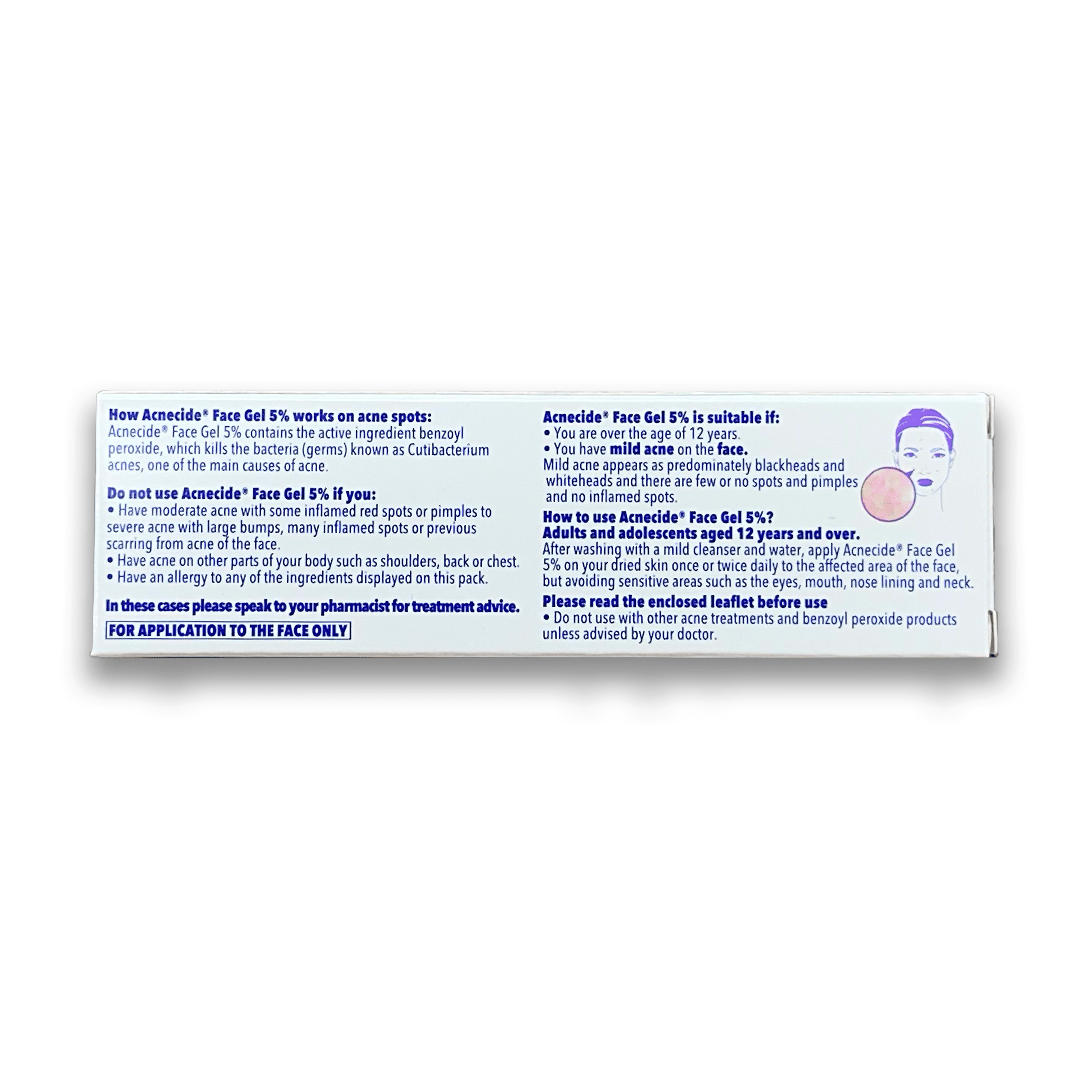
By using benzoyl peroxide to fight the bacteria that cause acne, reducing inflammation and unclogging pores to prevent blackheads, whiteheads, and pimples.
✅ Same Day Dispatch
✅ Discreet and confidential
✅ Professional advice and prompt support
Couldn't load pickup availability
Pickup available at UK Pharmacy
Usually ready in 24 hoursWe also offer
Acnecide 5 Gel - Target Acne with Benzoyl Peroxide Formula
Topical acne treatment gel.
No
Benzoyl Peroxide
The effectiveness of Acnecide varies from person to person. Some may see improvement within a few weeks, while others may take longer. Consistent use and adherence to the treatment regimen are key for best results.
By using benzoyl peroxide to fight the bacteria that cause acne, reducing inflammation and unclogging pores to prevent blackheads, whiteheads, and pimples.
Common side effects of Acnecide may include: Dry skin Redness of the skin Peeling of the skin Burning sensation of the skin Itching of the skin Pain or stinging sensation of the skin Skin irritation (irritant contact dermatitis)
Patient experiences
Verified reviews from patients across UK.

Excellent customer service from start to finish for registration.
I collected item in person from their London location, it was very easy to...
I really can't recommend Rightangled highly enough, they have everything spot on. Their price's are competitive and the added discounts on top are fantastic...
Never had a problem with this company. Always checking in to make sure my weight loss journey is on track. Pricing is competitive and postal spot on...
I have been with rightangled for over a year. Their customer service is amazing. They always go above & beyond. Nothing is too much trouble. They are so efficient on...
I have been with this company since August and I am so happy I moved companies. The service has been incredible. They have made it so easy and worry free I order and within...
I find right angled brilliant. No nonsense with consistently low prices on weight loss meds. I used to shop around before right angled but don’t feel the need to anymore as their prices are great...
2nd month with Rightangled and the reordering process is very quick and straightforward unlike other providers I have used in the past...
Using their services for more than a year and half. They are just great, any issues has been handled with kindness and professionalism. The order will arrive as expected in..
If you have any questions, you are always welcome to contact us. We'll get back to you as soon as possible, within 24 hours on weekdays.
Contact Us
Reach out to us with any questions or feedback. Our team is available via email at info@rightangled.com to ensure you get the support you need.
Shipping Information
Receive your orders quickly and reliably. Choose from multiple delivery options at checkout for convenience and speed. All orders placed before 3 pm are processed on the same day.
Customer Support
Our dedicated team is here to help you every step of the way. Contact us for assistance with orders, tests, or any other inquiries. We are available Monday to Friday between 8 am and 5 pm, and on Saturdays between 9 am and 1 pm.
FAQ’s
Find answers to commonly asked questions about our services, tests, and procedures. Our help centre proovides quick solutions and detailed information.
Acnecide 5% Gel is a pharmacy treatment for mild to moderate acne on the face, chest and back. It contains benzoyl peroxide 5% in an aqueous, non alcoholic gel base, and is used once or twice a day across the whole area affected rather than dabbed on individual spots.
Benzoyl peroxide releases oxygen into the pore, which makes it a hostile environment for Cutibacterium acnes, the bacteria involved in inflamed spots. It also helps clear the plugs of dead skin and oil that block pores in the first place. Because it works on bacteria without the resistance problems associated with antibiotics, it is often the first step recommended for spots that are red and inflamed.
The gel formulation is designed so the active ingredient penetrates into the deeper layers of the skin where acne lesions develop, which is why it is suitable for the face, chest and back. The aqueous, non alcoholic base aids absorption and precise application on acne prone areas without the drying effect associated with alcohol based products.
Wash the area with a mild cleanser and pat dry. Apply a thin layer over the whole affected area, not just visible spots, and wash your hands afterwards. Many people start once daily in the evening and build up as the skin adjusts. Give it time, since acne treatments generally need several weeks of consistent use before the picture changes.
It is suitable for adults and children over 12 with mild to moderate acne. Avoid it if you have had a reaction to benzoyl peroxide before, and keep it away from the eyes, lips, inside of the nose and broken skin.
Dryness, peeling, redness and a mild stinging sensation are common in the first couple of weeks and usually settle. Benzoyl peroxide bleaches fabric, so keep it off clothes, bedding and towels, and use a plain moisturiser and daily sun protection alongside it. Stop and seek advice if you get marked swelling, blistering or a rash that spreads. Our UK pharmacy team can answer questions about this product before you buy.
How long before I see a difference?
Acne treatments are usually judged over six to twelve weeks of regular use rather than days.
Can I use it with other acne products?
Check with a pharmacist first, since combining strong actives can irritate the skin.
Does it bleach towels?
Yes. Benzoyl peroxide can lighten coloured fabric, so use white towels and bedding while you are treating.
Always read the patient information leaflet supplied with the pack before use.
Medically reviewed and published
This page was medically reviewed by Dr Sohaib Imtiaz, Clinical Lead on

3 MIN ONLINE ASSESSMENT

CLINICIAN REVIEWS YOUR CASE

PRESCRIPTION + NEXT DAY DELIVERY
Please read our FAQs page to find out more.

UK clinicians and support teams available 7 days a week

Next-day delivery across the UK is our standard.

Pause, change or restart your treatment anytime

GPhC-registered pharmacy with secure checkout