

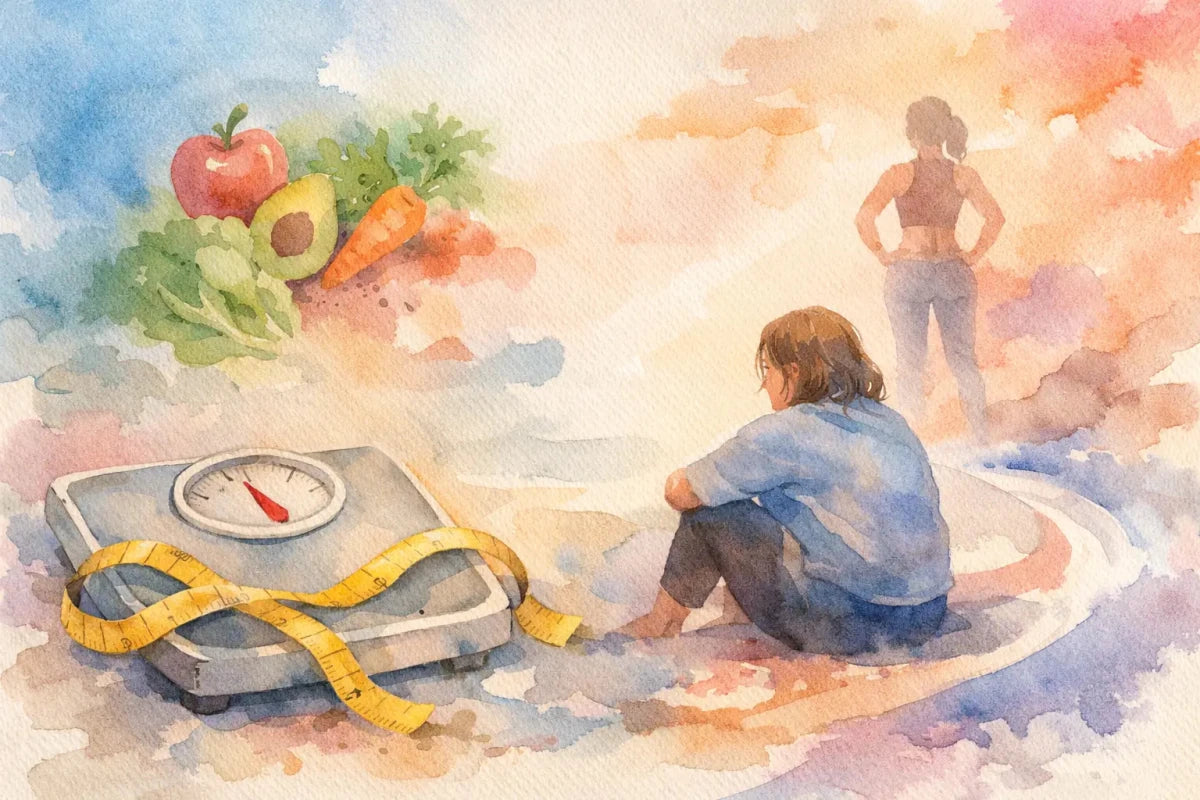
Si alguna vez ha perdido peso, lo ha recuperado y se ha culpado a sí mismo por no ser lo suficientemente disciplinado, no está solo. El control del peso después de dietas fallidas rara vez se debe a la falta de esfuerzo. Más a menudo, es el resultado de usar una estrategia a corto plazo para un problema de salud a largo plazo.
Muchas personas llegan a este punto sintiéndose frustradas, escépticas y cansadas de promesas que parecen sencillas pero que ofrecen muy poco. Puede que haya probado el recuento de calorías, la reducción de carbohidratos, los sustitutos de comidas, los períodos de ayuno o un plan de ejercicio intenso que funcionó brevemente y luego se volvió imposible de mantener. El patrón es común y tiene consecuencias físicas y emocionales reales. Lo que importa ahora no es encontrar un plan más estricto. Es elegir uno más realista.
Por qué las dietas fallidas ocurren tan a menudo
La mayoría de las dietas fracasan por la misma razón que muchos arreglos rápidos fracasan en la atención médica: se centran en el control a corto plazo en lugar del tratamiento a largo plazo. Un plan puede producir resultados iniciales rápidos y aún así ser inadecuado para la vida cotidiana. Si depende del hambre constante, de reglas alimentarias rígidas o de un horario que choca con el trabajo y la vida familiar, es poco probable que dure.
La biología también importa más de lo que mucha gente cree. Cuando se pierde peso, el cuerpo a menudo responde aumentando las señales de hambre y reduciendo el gasto de energía. Esto significa que la misma rutina que ayudó a perder peso puede volverse más difícil de mantener con el tiempo. Esta es una de las razones por las que la recuperación de peso es tan común, incluso en personas muy motivadas.
También está el problema del pensamiento de todo o nada. Muchos planes de dieta dividen los alimentos en categorías de buenos y malos, lo que puede crear un ciclo de control estricto seguido de atracones una vez que las reglas se vuelven demasiado difíciles. Para los adultos ocupados, especialmente aquellos que hacen malabares con largas horas de trabajo, el cuidado de los niños, los desplazamientos y la falta de sueño, ese ciclo puede repetirse durante años.
El control de peso después de dietas fallidas necesita un modelo diferente
Un mejor enfoque comienza con una pregunta más precisa. En lugar de preguntar: "¿Cómo me obligo a seguir una dieta?", pregunte: "¿Qué tipo de apoyo haría que la pérdida de peso saludable fuera realista para mí?".
Ese cambio suena pequeño, pero importa. El control de peso sostenible generalmente se basa en tres cosas: un déficit calórico que pueda tolerar, hábitos que se ajusten a su vida real y apoyo que lo ayude a mantenerse constante cuando la motivación disminuye. Para algunas personas, los cambios en el estilo de vida por sí solos pueden ser suficientes. Para otras, el apoyo médico puede hacer que el proceso sea más manejable y más efectivo.
Aquí es donde un modelo dirigido por un médico puede ayudar. Si tiene un historial de dietas repetidas sin resultados duraderos, podría valer la pena considerar el peso como un problema médico, no como un fracaso personal. El apetito, la respuesta a la insulina, la alimentación emocional, la calidad del sueño, el estrés, el uso de medicamentos y las afecciones médicas subyacentes pueden influir en los resultados. Tomar en serio el control de peso significa tomar en serio esos factores también.
Lo que suele incluir un plan sostenible
Los planes más sólidos rara vez son dramáticos. Suelen ser estructurados, flexibles y específicos.
La nutrición sigue siendo importante, pero el objetivo no es la perfección. Es la constancia. Esto puede significar comer más proteínas para mejorar la saciedad, elegir alimentos con más fibra, reducir los bocadillos frecuentes o preparar comidas que eviten el bajón de la tarde que lleva a comer en exceso por la noche. El plan adecuado depende de su rutina, preferencias y perfil de salud.
La actividad también es importante, pero no solo como una forma de quemar calorías. El movimiento regular ayuda a proteger la masa muscular durante la pérdida de peso, apoya la salud metabólica y mejora el estado de ánimo. Dicho esto, el ejercicio por sí solo a menudo se sobreestima como una herramienta para perder peso. Si un programa se basa en sesiones diarias de alta intensidad para compensar una dieta insostenible, es poco probable que se mantenga.
El sueño y el estrés a menudo se ignoran, sin embargo, ambos pueden afectar el hambre, los antojos y la toma de decisiones. Alguien que duerme cinco horas por noche mientras intenta seguir un plan restrictivo se enfrenta a un desafío muy diferente al de alguien con un descanso predecible y poco estrés. El control del peso debe tener en cuenta la vida real, no las condiciones ideales.
Cuándo puede ser apropiada la medicación
Para algunos adultos, el tratamiento con receta puede desempeñar un papel importante en el control del peso después de dietas fallidas. Esto no se trata de tomar el camino fácil. Se trata de reconocer que, para ciertas personas, la regulación del apetito y la pérdida de peso mejoran significativamente con apoyo médico.
Los medicamentos recetados para la pérdida de peso pueden ayudar a reducir el hambre, mejorar la saciedad y facilitar el mantenimiento del déficit calórico necesario para un progreso significativo. Esto puede ser particularmente útil si los intentos repetidos de dieta se han visto socavados por antojos persistentes, un fuerte apetito o una alimentación de rebote después de períodos de restricción.
La medicación no es adecuada para todo el mundo, y no es un sustituto de los cambios de comportamiento. Existen criterios de elegibilidad, posibles efectos secundarios y consideraciones prácticas sobre el uso continuo. Pero para la persona adecuada, puede convertir la pérdida de peso de una lucha constante en algo más factible.
Esta es una de las razones por las que los servicios en línea regulados se han vuelto cada vez más relevantes. Para los adultos del Reino Unido que desean un acceso rápido y discreto a la atención dirigida por un médico sin demoras innecesarias, un modelo de evaluación digital puede hacer que el tratamiento sea más accesible. Rightangled, por ejemplo, ofrece apoyo para la pérdida de peso dirigido por médicos, diseñado para adaptarse a la vida moderna, con un enfoque en la conveniencia, la seguridad y la continuidad.
Cómo reconstruir la confianza después de repetidos contratiempos
Una de las partes más difíciles de las dietas repetidas no es la recuperación de peso en sí. Es la pérdida de confianza que le sigue. La gente empieza a asumir que nada les funcionará, o que son la excepción a cada historia de éxito que leen.
Esa reacción es comprensible, pero a menudo se basa en la conclusión equivocada. Si varios métodos insostenibles han fracasado, eso no prueba que no se pueda perder peso. Generalmente prueba que esos métodos no fueron diseñados para un uso a largo plazo.
Reconstruir la confianza significa establecer metas medibles pero realistas. En lugar de perseguir un objetivo dramático con un plazo agotador, concéntrese en lo que puede mantener durante los próximos tres meses. Eso puede incluir una modesta pérdida semanal, menos episodios de atracones, una mayor conciencia de las porciones o simplemente sentirse más en control con la comida.
También ayuda eliminar el lenguaje moral del proceso. Los alimentos no son pecados. Una semana difícil no es un fracaso. El peso no se mueve en línea recta, y el progreso puede verse afectado por las hormonas, los cambios de fluidos, los cambios de rutina, las enfermedades y el estrés. Un plan útil debe sobrevivir a semanas imperfectas, no colapsar por ellas.
Las compensaciones a entender
No existe un enfoque único y mejor para todos. Una estrategia basada únicamente en la alimentación puede atraer a las personas que desean evitar la medicación, pero puede ser más lenta y difícil de mantener si el apetito es una barrera importante. La medicación puede mejorar la adherencia y los resultados, pero requiere una revisión clínica y una comprensión de los beneficios y efectos secundarios. La pérdida de peso rápida al principio puede ser motivadora, pero un progreso más lento a menudo es más fácil de mantener.
El costo, la conveniencia, la privacidad y el apoyo de seguimiento también importan. Muchos pacientes no solo quieren un tratamiento que funcione en teoría. Quieren un proceso que encaje en una semana ocupada y que no genere más fricción que el propio problema. Por eso el modelo de acceso importa casi tanto como el modelo de tratamiento.
Avanzar sin empezar otra moda
Si está considerando su próximo paso, lo más útil que puede hacer es dejar de buscar una versión más estricta de la misma fórmula fallida. Pregúntese si sus planes anteriores abordaron el apetito, la rutina, el estrés, el sueño y la idoneidad médica, o si simplemente le pidieron que se esforzara más.
Un plan estructurado, especialmente uno apoyado por un médico cualificado, puede ofrecer algo que las dietas de moda no pueden: un camino realista que respete tanto la biología de la pérdida de peso como las presiones de la vida diaria. Para muchas personas, ese es el punto en el que el progreso finalmente comienza a sentirse estable en lugar de frágil.
No necesita más culpa, y probablemente no necesite otro conjunto de reglas alimentarias impresas en negrita. Necesita un plan que sea médicamente sólido, lo suficientemente práctico para seguir y lo suficientemente flexible para durar. Ahí es a menudo donde comienza el cambio real.


Compartir:
Cómo pedir anticonceptivos online de forma segura
Análisis de sangre para desequilibrio hormonal explicado