

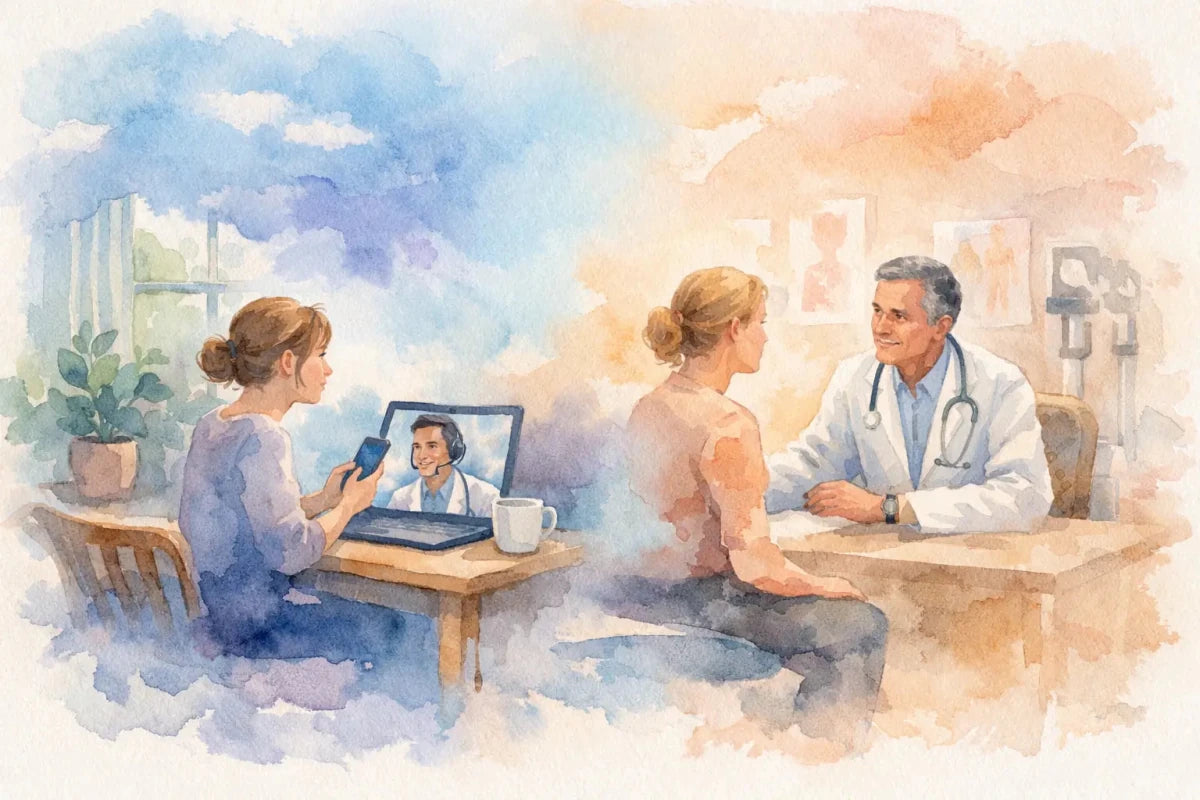
Te despiertas con un problema que no puedes ignorar: un brote de acné, una necesidad de anticoncepción recurrente, una preocupación privada que preferirías no discutir en la recepción, o un plan de pérdida de peso que quieres empezar correctamente. Es entonces cuando la pregunta se vuelve real: telemedicina vs cita con el médico de cabecera. Para muchos adultos del Reino Unido, no se trata de qué opción es mejor en teoría. Se trata de cuál te proporciona una atención segura y adecuada con el menor retraso.
La respuesta honesta es que ambas importan. La telemedicina ha cambiado la rapidez con la que las personas pueden acceder a tratamientos regulados, apoyo de seguimiento y servicios de prescripción. Una cita tradicional con el médico de cabecera sigue desempeñando un papel vital cuando los síntomas son complejos, urgentes o necesitan un examen físico. Conocer la diferencia puede ahorrar tiempo, reducir la frustración y ayudarte a obtener la atención adecuada a la primera.
Telemedicina vs cita con el médico de cabecera: ¿cuál es la diferencia real?
La telemedicina es la atención médica que se presta a distancia, generalmente a través de una evaluación en línea, una consulta por video, una revisión telefónica o mensajes digitales con un clínico. Dependiendo del proveedor y la afección, esto puede llevar a consejos, aprobación de tratamiento, una receta, derivación o seguimiento continuo.
Una cita con el médico de cabecera suele significar hablar con tu médico de cabecera del NHS o privado en persona, aunque muchas consultas ahora también utilizan triaje telefónico y por video. La distinción clave no es simplemente en línea versus cara a cara. Es el tipo de vía de atención. La telemedicina a menudo está diseñada para la velocidad, la comodidad y el tratamiento basado en la idoneidad. La práctica general está diseñada para gestionar una atención amplia, continua y a veces más compleja desde el punto de vista médico.
Esa diferencia importa porque no todos los problemas de salud necesitan la misma vía. Si necesitas tratamiento para una afección común y sencilla y puedes responder a preguntas clínicas con precisión, la telemedicina puede ser muy eficaz. Si tus síntomas no están claros, empeoran o es probable que necesiten un examen, tu médico de cabecera suele ser el mejor lugar para empezar.
Cuándo la telemedicina suele ser la mejor opción
La telemedicina funciona mejor cuando la decisión clínica se puede tomar de forma segura a partir de tu historial médico, síntomas, fotografías cuando sea apropiado y una evaluación estructurada. Por eso se adapta a muchas afecciones repetidas, sensibles y bien definidas.
Por ejemplo, si buscas ayuda para el control de peso, la caída del cabello, la disfunción eréctil, la anticoncepción, el acné, los síntomas menopáusicos o problemas digestivos comunes, una consulta en línea puede ser una ruta práctica. Estas son áreas en las que los cuestionarios dirigidos por el clínico y los controles de seguimiento a menudo pueden establecer si el tratamiento es apropiado sin la demora de una sala de espera.
La comodidad no es una ventaja pequeña. Para profesionales ocupados, padres y cualquier persona que haga malabarismos con el trabajo, los desplazamientos o las responsabilidades de cuidado, la telemedicina elimina gran parte de la fricción que impide que las personas traten los problemas de salud con prontitud. También ofrece un nivel de discreción que algunos pacientes prefieren encarecidamente, especialmente para preocupaciones íntimas o vergonzosas.
La velocidad es otro factor. Muchas personas no intentan reemplazar a su médico de cabecera. Intentan evitar esperar semanas por una cita para un problema que es tratable ahora. Un proveedor de telemedicina regulado puede hacer que ese proceso sea mucho más rápido sin dejar de mantener la supervisión clínica.
Dicho esto, la comodidad nunca debe confundirse con la atención informal. Una buena telemedicina es estructurada, dirigida por un médico o un prescriptor, y construida en torno a controles de seguridad. Los proveedores más sólidos son claros sobre la elegibilidad, los efectos secundarios, las contraindicaciones y cuándo un paciente debe ser visto en persona.
Cuándo una cita con el médico de cabecera es la opción más segura
Si tu afección puede requerir un examen físico, una cita con el médico de cabecera suele ofrecer un punto de partida más adecuado. Esto incluye síntomas como dolor en el pecho, dificultad para respirar, dolor abdominal intenso, un nuevo bulto, sangrado inexplicable, cambios neurológicos, infección significativa o cualquier cosa que se deteriore rápidamente.
Lo mismo se aplica si tus síntomas son vagos o involucran varios sistemas corporales. La telemedicina puede evaluar muchas cosas bien, pero hay límites a lo que se puede entender sin examinarte, revisar observaciones o solicitar pruebas a través de tu vía médica habitual.
Un médico de cabecera también puede ser la mejor opción si tienes múltiples afecciones crónicas, tomas varios medicamentos o tienes un historial clínico complicado que necesita continuidad y contexto. La práctica general está diseñada para observar a la persona en su totalidad a lo largo del tiempo, no solo una única solicitud de tratamiento.
La salud mental es otra área donde depende. La telemedicina puede apoyar algunos aspectos de la atención, especialmente para el cribado, el seguimiento y las revisiones de medicación. Pero si existe un riesgo significativo, síntomas graves o preocupaciones de protección, un médico de cabecera o un servicio de urgencias es más apropiado.
Telemedicina vs cita con el médico de cabecera para necesidades comunes diarias
Para muchas personas, la decisión real es menos dramática. Se trata de necesidades de salud ordinarias que aún importan: recetas recurrentes, revisiones de tratamiento, apoyo basado en síntomas y atención preventiva.
En estos casos, la telemedicina a menudo se impone en términos de practicidad. Si ya conoces el problema, entiendes tu historial y quieres una vía de tratamiento clínicamente revisada sin tener que reorganizar tu día, la atención en línea puede parecer mucho más eficiente. Esto es especialmente cierto para tratamientos que implican apoyo continuo, controles regulares o entrega a domicilio.
El tratamiento para la pérdida de peso es un buen ejemplo. Un servicio adecuado de control de peso no es simplemente una cesta de la compra con medicamentos añadidos. Debe incluir controles de elegibilidad, detección de contraindicaciones, supervisión de la prescripción y apoyo continuo. La telemedicina puede ofrecer eso de una manera que se siente estructurada y accesible, lo que es una de las razones por las que se ha convertido en una ruta tan popular.
Pero todavía hay situaciones en las que tu médico de cabecera sigue siendo fundamental. Si la obesidad está relacionada con presión arterial no controlada, problemas endocrinos complejos o síntomas que necesitan una investigación más amplia, tu médico de cabecera puede necesitar participar antes o junto con el tratamiento en línea.
¿Qué pasa con la seguridad, la regulación y la confianza?
Aquí es donde algunos pacientes dudan, comprensiblemente. Un servicio de telemedicina no debería sentirse como un atajo a los estándares médicos. Debería sentirse como atención médica brindada en un formato diferente.
En el Reino Unido, eso significa buscar signos claros de regulación, supervisión clínica y controles de prescripción adecuados. Un proveedor legítimo debe ser transparente sobre quién revisa tu caso, cómo se emiten las recetas, qué información se requiere y cuándo se denegará el tratamiento. Si una plataforma parece prometer medicación casi sin evaluación, eso es una señal de advertencia en lugar de un beneficio de conveniencia.
Una cita con el médico de cabecera conlleva su propia ventaja de confianza porque el sistema es familiar. Sabes dónde se guardan tus registros y quién es responsable de tu atención general. Los proveedores de telemedicina deben ganarse esa confianza a través de estándares profesionales, procesos seguros y una comunicación clara.
Para muchos pacientes, el mejor resultado no es elegir un modelo para siempre. Es usar cada uno para lo que mejor hace.
Cómo decidir entre telemedicina y una cita con el médico de cabecera
Empieza por la naturaleza del problema. Si es urgente, grave, inexplicable, empeora rápidamente o puede necesitar un examen, elige la atención presencial. Si es un problema común y bien definido y buscas principalmente una evaluación y un tratamiento oportunos, la telemedicina puede ser totalmente apropiada.
Luego, piensa en tu propio contexto médico. ¿Estás generalmente bien o tienes un perfil de salud más complejo? ¿Estás pidiendo ayuda con un problema recurrente o predecible, o algo nuevo y difícil de interpretar? Cuanta más complejidad haya, más valiosa se vuelve una cita con el médico de cabecera.
Finalmente, considera lo que más te importa en la práctica. Si la privacidad, la velocidad y la comodidad son barreras que han retrasado la atención en el pasado, la telemedicina puede eliminar esas barreras. Para muchos adultos, solo eso significa que los problemas se tratan antes en lugar de posponerse por otro mes.
Proveedores como Rightangled han desarrollado servicios en torno a esa realidad: evaluaciones en línea reguladas, revisión clínica, tratamiento con receta y entrega discreta que se adaptan a la vida cotidiana en lugar de interrumpirla. Utilizado de forma adecuada, ese modelo puede hacer que la atención médica se sienta más accesible sin bajar los estándares.
La mejor opción suele ser la que te permite recibir el tratamiento adecuado
Telemedicina versus cita con el médico de cabecera no es una contienda entre lo antiguo y lo nuevo. Es una cuestión de ajuste. Una vía ofrece velocidad, privacidad y comodidad para las condiciones adecuadas. La otra ofrece examen, continuidad y una gestión clínica más amplia cuando la situación lo requiere.
Si eliges basándote en el tipo de atención que realmente necesitas, en lugar de solo por costumbre, es mucho más probable que obtengas el resultado correcto. Y si alguna vez no estás seguro, trata esa incertidumbre como información útil. Por lo general, significa que tus síntomas merecen una mirada más atenta, no un tratamiento más rápido.
El enfoque más práctico es simple: usa la telemedicina cuando sea segura, estructurada y apropiada, y usa a tu médico de cabecera cuando la situación sea menos clara. Una buena atención médica no siempre ocurre en el mismo entorno. Ocurre cuando la ruta coincide con el problema.


Compartir:
Dosis Dorada de Mounjaro: Qué es y cómo la deciden los médicos
Cómo solicitar la repetición de recetas en línea